Showing posts with label Connections. Show all posts

Thursday, February 14, 2019

NYSACAC Legislative Advocacy Day


Earlier this week, I traveled to Albany for a NYSACAC Executive Board Meeting and for Legislative Advocacy Day. In my first year of serving as a High School Delegate, I am aiming to participate in as many aspects of our organization as I possibly can. Aside from NYSACAC though, this was also my first time inside the New York State Capitol and my first time doing any sort of political advocacy.

Our four topics of discussion with legislators and their staff were:
  • Highlighting the issue of food insecurity for college students
    • Only 3% of college students receipt SNAP benefits, even though 18% qualify
    • Students can't count class toward work hours, if they could, we could reach more students who have low food security by providing them SNAP benefits
  • Expressing concern over the dismantling of federal consumer protections in regards to for-profit colleges and the allocation of funds to schools that aren't serving their students.
    • For-profit students make up only 4% of students in NY State, but they represent 41% of defaulted student debt
    • In 2015, 37 million dollars in TAP grants were awarded to for-profit colleges with programs that failed or nearly failed federal standards
  • Restoration and expansion of TAP and HEOP/EOP funding
    • Opportunity programs expand access to higher education and improve graduation rates for New York's neediest students
    • We would love to see the TAP application process simplified and interpretation of regulations by colleges streamlined
  • Next steps for Dreamers as they pursue higher education
    • Undocumented students currently cannot get a driver's license. It would be a major step forward if they could legally drive. 
    • While we are excited for the Governor to sign the recently passed Dream Act, we encourage the state to be transparent about implementation
Overall, it was a busy day full of many observations about our political process. The building definitely was buzzing with energy and it was interesting to see so many advocates (representing many different causes) in the building. It was also fascinating to hear, through conversation, about how lobbyists for 'the other side' make their case to representatives. For example, in one discussion we were told that for-profit colleges need a break because they are already subject to so many regulations. (My reaction to that: for something so burdened with regulation, they sure produce a pretty awful product with low return on investment and sky high debt). 

Friday, March 31, 2017

Day 3 - Ohio Six Tour - Denison and Kenyon


Kenyon College
I apologize for the delay in getting this post up. Traveling home after a long day of tours and then returning to work resulted in things being a little behind schedule.

Our final day of the Ohio Six tour included visits to Denison University and Kenyon College.

Denison College
My impression of Denison is that it is a wonderful and vibrant place that is also nimble enough to make changes when they are needed. Case in point, they have launched 7 new majors recently, 5 within just the past year. These include relevant modern day interdisciplinary majors like: Data Analytics, Non Fiction Writing, and Financial Economics. They also just broke ground on a new performing arts center, a gift from Michael Eisner, of Disney fame (and also Denison Class of 1964). As part of our information session, a quote was shared that Andrew Delbanco made about the purpose of college being to help people become reflective citizen. Denison sees this as its mission and they seem to be doing a very nice job. For some context, the Robin Williams character in Dead Poets Society was based on a real life Denison professor.

Denison is small - the average class size is under 18 and the entire campus has about 2,250 students. It is a relationships based school, with strong career services, and an ideal location with a small town that is situated only about half an hour from a major metropolitan area (Columbus). Maybe more than any school in recent memory, Denison's President, Adam Weinberg, is fully integrated into campus life for both faculty and students. Our tour guide sends him texts. He has memorized the student body and can address most of them by first name. Another panelist emailed him to talk about his career path and a face to face meeting was arranged.

They admitted that the decisions garnered by Denison don't always make sense. They aren't solely driven by test scores or GPA. Instead, they say they are seeking the kind of students you'd want your own kids to date or be friends with. They do have Early Decision and the odds of admission are significantly higher through this path (as is true at many schools, so not a huge surprise there).

The physical campus is situated on a hill, so if you aren't a person who enjoys walking uphill, that might be a detractor. But otherwise, for students seeking a dynamic and friendly small liberal arts college, this is one to investigate.

Middle Path at Kenyon
Our final stop on the tour was Kenyon College. Kenyon is a good home for quirky kids who don't necessarily stick to just one 'subgroup' socially. Their fraternity brothers are also artists. Their athletes might also be in the orchestra. Those who are not intellectually curious need not apply and yet those who constantly obsess to get perfect grades will probably not be happy here either because grade grubbing isn't looked upon highly. This helps the applicant pool be self selecting and they are perfectly fine with that. Many of their overlap peer schools are located on the East Coast.  In fact, when I myself was walking around the campus physical plant reminded me very much of Middlebury in Vermont - expansive quads with mainly historic academic and residential buildings. There is also a dirt walkway called the middle path going down the center of campus connected the school to the nearby small town (with a post office, bookstore, and food establishments).

Only about 11-12% of students at Kenyon are from Ohio, so their is a national presence on campus. Their flagship program is often considered to be English/Writing but, as with most super high quality liberal arts schools, I'm not sure you can really go wrong in any discipline.

Thank you so much to the Ohio Six for hosting me (and my other school counselor colleagues). I learned so much and will now be able to better advise my students about this Ohio college options.

Sunday, September 25, 2016

Columbus NACAC Day 3!


For the closing day of NACAC I decided to go to two sessions: one about the national job outlook and one about the teenage brain.

The job outlook session was presented by the Department of Labor. While it was, admittedly, not the most lively of sessions, I did get to learn a lot about the careers that are projected to be growing rapidly in the coming years (along with those that are on the decline). Healthcare is the fastest growing sector and jobs in this field are the ones that are expanding at the fastest rates. This doesn't mean doctors though, it mostly means nurses (including nurse practitioners), home health aides, and other health support occupations. There are anticipated to be many job openings for people without formal education, but those jobs are expected to pay very very low wages. The earnings for a person with a bachelor's degree outpaces those without by more than double in terms of annual income. It is also projected that the sector of jobs with the most hiring will actually be careers that require a Master's degree - something to keep in mind for anyone concerned about the cost of college. One of the most useful things shared at the session was the website that will give state by state job predictions for different career paths. This can help show the landscape of how many openings there might be in New York in the next eight years.

http://www.projectionscentral.com/Projections/LongTerm

For a national look at job trends, you can also look at the Bureau of Labor Statistics job outlook

http://www.bls.gov/careeroutlook/

The most interesting trivia is that the job with the fastest job growth in the nation is wind turbine technicians. It only represents about 4800 jobs nationally, but no other job is expanding more quickly.

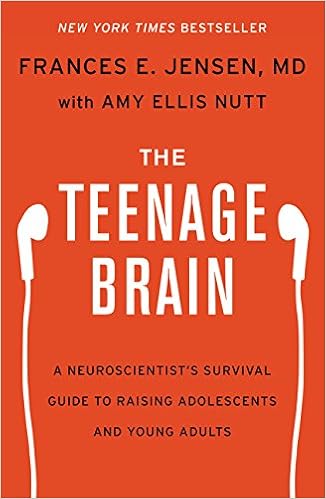
The next session I went to was a talk by author and physician Dr. Frances Jensen. She presented a session called 'The Teenage (and Young Adult) Brain: Neuroscience You Can Use.' She shared that some of the behaviors that we marginalize (like risk taking and poor decision making) are actually neurologically appropriate behavior for teens. That isn't to say that unhealthy choices should be encouraged, but she encourages instead looking at it through a lens of normal human development. It turns out the brain is the last organ in the human body to fully develop. Research indicates that the brain is not fully connected and functioning until the mid to late twenties - far after college is complete. The parts to mature last are those connected with things like empathy, decision making, executive functioning, and impulse control (all located in the frontal lobe). The brain has connections within it called synapses and those synapses are insulated by a fatty substance called myelin. It takes years the the myelin to fully wrap around the connections and this it the reason teenagers can have a somewhat 'uneven' behavior and decision making. If this prognosis is feeling bleak though, it isn't. While these 'unfinished' teen brains might sometimes be thrill seeking or highly emotional, they are also at their peak in terms of learning new things, building new and strong connections faster, and being plastic. This means that the teenage years are actually a wonderful window within which one can build new (and very strong) habits. If teens can work on practicing positive behaviors, those behaviors can become second nature. 

In this same way, teens are also much more highly susceptible to addiction. Bad habits can become addiction in teens much faster and with much less exposure than adults. This is why exposure to drugs and alcohol during the teen years, while the brain is not yet fully mature, can lead to much more serious lingering issues (including not just addiction but also some mental illness.) Her comments on marijuana and alcohol were very interesting, but the one I found most enlightening is that marijuana has lingering results on synapses (aka brain connections) for about four days. So for a teen that is choosing to 'let loose' on the weekend can absolutely see lingering cognitive effects well into the school week. Her advice to help the teenage brain operate at peak function is to maximize quality sleep and minimize distraction (particularly from screens). 

Overall, I had a wonderful experience at NACAC. I got to visit three great (and very different) campuses, connect (and reconnect) with colleagues, and get essential updates on some of the things changing the most quickly within college admissions. I want to take this opportunity to thank the PTA for their generous support of my attending this conference (and the college office in general). Next year, Boston!

Thursday, September 22, 2016

Columbus NACAC - Day 1


The NACAC conference is officially in session!

I spent the morning at a lecture sponsored by SMU where we got to hear from a wonderful SMU faculty member, Dr. Maria Dixon Hall. She spoke to us about a new initiative at SMU to try and shift the culture around race and culture on campus. The plan is to not just implement orientation trainings or hire faculty of color but to instead try to help all students increase their cultural intelligence. Her recommendations for how to do that in your every day life is to try and not just talk to a person from a different culture but to instead try and understand their culture through exposure. Perhaps her most interesting suggestion is to visit a grocery story -- a place to observe very nuanced cultural behaviors. It was a wonderful talk and a great way to start the day.
His head is a Buckeye! (Ohio State mascot, tree byproduct, and delicious peanut butter and chocolate treat)
For the afternoon, I checked off one more college visit by going to see The Ohio State University. As the third most affordable school in the Big 10 for out of state students, Ohio State should probably see more traffic from ElRo students than it does. In and out of state students are evaluated on the same 10 factors and preference is not given based on residency the way it might be at public land grant universities in other states. Letters of Recommendation are optional and OSU is on the Common App. Best of all, there is merit money available to students to the tune of full tuition. In order to qualify for merit aid, students must apply by no later than November 1. There are also some additional essays to complete in order to compete for some of these merit dollars. To learn more, look up the National Buckeye program and Morrill Scholarship on their website. Like other Big 10 schools, the benefits here include endless academic options, massive amounts of research, and serious school spirit.
The Oval
I also want to point out that when I try to explain to families that the cost of living in the Midwest will help pay back the cost of the plane ticket, here is what I mean:


This cost me $6.80. That salad had Kale and quinoa in it. KALE. Plus a drink and banana.

In an interesting stroke of luck, the Geology museum on campus has this gorgeous quartz found in the 1800s in Ellenville, NY -- home of the ElRo senior trip!
I finished out the day by attending the annual NYSACAC meeting and connecting with fellow New Yorkers here at the conference.

Tomorrow is always the hardest day with an early start and late finish, so I'm signing off for now.

OH-- IO!

Wednesday, July 20, 2016

Dear Malcolm,


You might have listened to Malcolm Gladwell's Revisionist History podcast called 'Food Fight', an examination of what he considers to be the moral aberration of colleges daring to serve high qualify food to their students. In his opinion, he feels that a school should not be spending dollars on amenities and should instead be spending dollars on financial aid. And if his message was that general message, I'm with him. Absolutely-- if the decision is between lowering student debt for low income students or adding a rock climbing wall to the gym, I'm on board with scrapping the rock wall. 

But for some reason, he didn't decide to do research about those types of amenities. Instead, in my opinion, he offered a grossly simplistic comparison of two schools, Vassar and Bowdoin, where he felt compelled to go so far as to tell listeners not to go to Bowdoin because their evil dining hall is the root of America's education problem.

My initial problem with his comparison of these two schools is: if you want to criticize schools that are being unfair to low income students or have their priorities in the wrong place, maybe don't start with a school with need-blind admissions that pledges to meet 100% of demonstrated need for all admitted students. (Bowdoin is need blind and meets 100% of demonstrated need). You can make the argument that their version of demonstrated need isn't fair or should be revised. But that wasn't the topic of this podcast. In fact, there didn't seem to be an ounce of research about admissions policies or recruitment practices. The only staff interviewed at Bowdoin were from dining services.

My next problem with this comparison is that while yes, both Bowdoin and Vassar private liberal arts colleges I would hardly call them identical. Vassar has been successful in recruiting and enrolling Pell Grant recipients (which is, by the way, to be applauded and I'm certainly a huge fan of the progress they have made). But, Vassar is also located in Poughkeepsie, which conveniently happens to be the last stop the Metro North train from New York City. Vassar is 200 miles from Boston. 85 miles from Albany. 170 miles from Philly. 75 miles from New Haven. Bowdoin's only major urban center within 200 miles is Boston, compared with Vassar's significantly more centrally located geographic location. Saying that a college in Maine has the same pool of low income applicants as a college in upstate New York just feels lazy.

If we want to talk about morals, what about the morality of food? When a huge corporation provides low quality cheap food to students with outsourced ingredients, chemicals, hormones, and low paid staff, where is the moral outrage there about the local, national, and global impact of what we eat? I'm curious to know exactly how expensive the Bowdoin dining services program is? What impact does it have on their local economy, helping to keep local farms in business and respecting the environment by using higher quality healthier ingredients? Yet this podcast never delves into that. It never shares exactly what the dollars and cents are of the Bowdoin dining program. It just says that there is a correlation between good food and lower financial aid budgets. I'm not convinced.

Had Malcolm Gladwell interviewed any person from the part of Bowdoin's administration that deals with institutional goals. I suspect they would have learned that Bowdoin, like virtually every small liberal arts college with a large endowment and need blind admissions, is hungry to enroll as many bright low income students as they can find. Because income is not considered in admission decisions, if Bowdoin suddenly had a 30% increase in high ability low income applications, they would accept 30% more students from these income brackets. To say that having cheaper food would suddenly increase their Pell Grant recipients is a fundamental misunderstanding of how admissions works.

The condescending tone he uses when suggesting the students have better things to say about the food than they do about their classes is a low blow. Instead of mocking them, why wouldn't he go ahead and ask them about their classes instead of making an assumption? 

If Malcolm wanted to make this argument, he could have selected a Need-Aware school. Why he didn't is beyond me, as there are tons to pick from. If we want to argue the morals of college admission, crucifying Bowdoin feels like the wrong place to start.

Image

Monday, March 14, 2016

Thanks SUNY Cobleskill!

 On Friday, I went to one of the more unique college information sessions for guidance counselors that I've attended so far. It was a breakfast hosted at a Brooklyn restaurant by SUNY Cobleskill. The location and format was chosen because a SUNY Cobleskill Culinary Management graduate (and former NYCDOE student) is now the executive chef at the venue and they wanted us to be able to experience, first hand, the work of one of their students. It was a really cool way to connect the presentation to our work. (Not to mention, the food was really delicious).

SUNY Cobleskill is a technical school with 2,500 students located about 3 hours from New York City. SUNY technical schools offer both 2 and 4 year degrees on a residential campus. This has a slightly different feel than a community college (which tend to focus on serving their local county and have many commuter students). Most of the programs focus on hands-on learning (as opposed to, say, a strictly liberal arts college) and some of the degree programs are a little out of the ordinary. For example, Cobleskill offers training in things ranging from Turfgrass Management to getting a certificate to be a Paramedic. They also have traditional college majors like Business Administration and Applied Psychology.

Unique programs of note include:
  • Their early assurance pre-med program - allowing students to potentially be admitted early to medical school (SUNY Upstate) after spending part of their undergraduate degree at either Cornell or Siena. For consideration in this program, students must have a 90+ GPA and a minimum of 1200+ on the SAT. 
  • SUNY Cobleskill is on the forefront of the movement toward environmentally sustainable, organic, farm to table food production - all things that I think are gaining momentum right now. 
  • The Animal Science program is a good fit for pre-vet students and there are on campus facilities to give students hands on access to livestock and large animals (something that is part of all Vet school programs). 
  • For students interested in forensics, they offer a 2-year degree in Histotechnology - the science of tissue and forensic science analysis. 
All in all, this just goes to show the huge range of options within SUNY's 64 campuses. For students who learn best by doing, SUNY Cobleskill might just have the right mix of choices. Thank you to SUNY Cobleskill for hosting me!  For students interested in going to visit, they sponsor bus trips from New York City - look here for more information.

Thursday, February 18, 2016

Inside Mount Holyoke College's Application Review


Thank you to Mount Holyoke College for hosting me this week for a conference dedicated to understanding the application review process. I've been on many guidance counselor 'tours' to help me understand the unique personality of colleges over the years, but this is the first time I've been invited to an event focused instead on a really detailed look 'behind the curtain' about how the application reading process works.

Especially because I left the world of college admission before most colleges transitioned to reading files online, this was a really cool way to go back to those days of reading files and experience how technology has changed things. While every college has their own unique priorities in reading, this helped me understand much more deeply how and why Mount Holyoke admits the students they do.

Too many young women discount women's colleges without giving them a fair shake. Some of the reasons to consider a women's college include: greatly increased diversity (including more than just racial and ethnic diversity), stronger financial aid packaging (both merit and need based), stronger STEM outcomes (including medical school and PhD program acceptance rates), and the legacy of tradition and alumna connections. A small liberal arts college isn't right for everyone, but if you are considering other top quality small schools, Mount Holyoke deserves to be in the mix. The young women I got to meet over these three days were poised, bright, articulate, confident, and engaging. If that sounds like an environment you might like, you know what to do. An added bonus, of course, is that in the event you do feel the need for a change of pace, there are four other nearby colleges where you can cross-register (three of which have male students enrolled).

I want to thank the Mount Holyoke staff for their transparency and hospitality. It was a great three days! I also had the chance to catch up with current Mount Holyoke student and ElRo Class of 2014 Elro Alum Chloe L. (pictured above)!

Saturday, October 3, 2015

NACAC San Diego Day 3


The last three sessions of the conference happened today.

I started my morning at a session about letters of recommendation at highly selective colleges. The presenters gave insight as to what information is most useful and general guidelines for writing effective letters. The theme was mainly to emphasize that the role of a letter of recommendation is to place the student in context and help the reader understand how the student operates in comparison to their peers. This doesn’t only mean repeating how their grades stack up compared to the rest of the class. It means giving background on things that might not already be included on the application. For example, one of the panelists shared that she was having an issue with a student who was late for a meeting with her. When she went to go find him, she discovered that he was in the cafeteria tutoring a peer in AP Calculus. This anecdote gives context beyond the fact that he is a strong math student, but that he is also someone willing to sacrifice his own timeliness to help a peer understand complex coursework. There was also an emphasis on keeping letters to one page (something, with over 100 letters to write per year, I already do). There was also some discussion of helping put the the student in context compared to the rest of the state/nation. This might mean pointing out that a student is in the top quartile band of test takers for males in the state, etc.

Perhaps the most buzzed about session of the conference this year though was the session I went to next: The Coalition For Access, Affordability, and Success. For those that haven’t seen the press release from earlier this week, there is a group of about 80 colleges (all of whom graduate at least 70% of their students in six years and who are either private and meet full demonstrated financial need or are public and have affordable in-state tuition for residents of their state) who are rolling out a new approach to the college search and application process called the Coalition Application. In full disclosure, I also feel obligated to share that I have been asked to join the Coalition Counselor Community (CCC), a group of 46 high school counselors and CBO representatives from around the nation to serve as an advisory board to the Coalition, so I have a bit of a unique perspective. For the purposes of this blog, I’m going to present the comments that were brought up in the session with limited personal comments of my own. I do this partially because I’m in a fortunate position to have a way to directly comment to the Coalition Board via the CCC and partially because this has been a highly volatile topic of discussion in the counseling community over the past week and I don’t think a blog post is the most productive forum to use as a soapbox.

Some background: two years ago, the Common Application 4 went live and there were admittedly some major bumps in the road. Students were frustrated, school counselors were putting out fires left and right, and colleges felt betrayed by the roll out of an application that clearly hadn’t been well tested and wasn’t technologically sound. Reading schedules were impacted, hours of overtime was put in, and many colleges felt they needed to take action. Discussions turned from the theoretical to the concrete when the Coalition was founded in June of 2015 and this group has now made public their plan to roll out a brand new way to reach students: using technology and reflection to serve as an alternative to the Common Application for these 80+ partner schools. 

The session opened with a transparent disclosure that the Coalition is a work in progress. They have lofty goals and they know it. They want to level the playing field in admissions, giving low income students the chance to better understand how to be matched with high quality colleges that will reduce their debt burden. They feel that technology, and this Coalition site, can help to do that by giving students a virtual locker. This locker will be a place to store academic achievements, upload video, write reflective essays, and keep track of their high school involvement both inside and outside of the classroom. Students will have the ability to share their locker contents with the influential adults in their lives, and even its been proposed with the colleges themselves, to get feedback in the years leading up to the fall of senior year. These locker items can then be utilized in the 12th grade to include in their Coalition Application. The locker will be rolled out in January of 2016 and the application is proposed to go live in the summer of 2016. This is a pretty major power play from some of the most selective colleges in the country. They are taking a bold stance in saying that the college application process should welcome innovation and that the market share of the Common App was turning into a monopoly.  They believe there is room for more than one option for students. Coalition schools want more autonomy in their application design than the Common App was giving and they feel that the transactional nature of applying to college during one semester of senior year is missing a chance for innovation and creativity.  The aim is make the application to college more reflective—a chance for, in their words, self-discovery.

Before opening up for questions, the presenters commented on the three themes of repeated concerns they have already heard this week.

1)   Concern: This will feed the frenzy. Response: They hear us. They reiterated that colleges will not have access to the student locker contents and will not be viewing anything in advance. If a student puts a paper there in the 9th grade, it won’t be shared with anyone unless the student chooses to share it. The locker can be used by any student, even students not planning to file a Coalition Application.
2)   Concern: Feedback was that the word "portfolio" was bad - it sounds evaluative. Response: They are calling it a locker now. It is not evaluative. Aim is to help student see their own progress and connect their work in high school with their path to college.
3)   Concern: This will create additional work for students and counselors. Response: For some students/counselors this will be less work because colleges that used to have their own separate non-Common App application will now all be able to be submitted on one platform. (Example Given: a student can apply to Maryland, Clemson, Emory, and Smith on one site. The current system would require three sites).

The following topics were brought up during the discussion. Again, I’m listing them here without my own comments. I’ll leave it to you as the reader to ponder:
  • If the goal of Coalition is to help not overburden the school counselor, but this is rolled out without segmented communication to the different stakeholders, the questions will be directed to the school counselor who now has to serve as the liaison to explain what this is, what it means, and how to use it.
  • Instead having essays on the Coalition Application, call them reflections
  • Won’t this longer process favor wealthier students who have the ability to get better and higher quality feedback? Is there going to be a surge in demand for independent college consultants?
  • Will students be so busy preparing for their college application that they miss out on high school? Are we pushing kids toward goals they aren’t developmentally ready for? Are educational psychologists and mental health professionals being consulted to keep cognitive development in mind?
  • Is having that feature of getting feedback on the locker contents letting everyone play college counselor, even if they may not be qualified to do so? Perhaps an answer to this could be that there would be transparency to show who exactly has given feedback and what their relation is to the student.
  • From a college admission perspective, who is going to be evaluating the Coalition Applications? How will this change the reading/committee process?
  • If this was born from the ill-conceived and rushed roll out of Common App 4, is this roll out also being rushed? Is there a risk that the speedy timeline will result in the same kind of difficulty for everyone involved? People feel they need hard deadlines with lots of advance notice.
  • If the mission is access, why are some colleges excluded?
  • If the aim of this initiative is college access, why isn’t this application only for low income students? (Many of these comments/questions got applause from the audience – think of it like Congress clapping at the State of the Union-- but this comment/question got, by far, the longest and loudest sustained response from the room)
  • How will student privacy issues be addressed? How can the feedback feature maintain confidentiality and privacy?
  • Colleges, even with the best of intentions, might think they know what it is like on the high school side of the desk, but they have no idea. Is involving school counselors this late in the game, three months before the locker goes live, a problem?

Frankly, we ran out of time. I’m certain these issues are only the tip of the iceberg in terms of the thoughts that counselors and colleges had in the room. I’m eager to continue the dialogue via the CCC and will sit back and watch, like everyone, how the Coalition’s first year goes.

My final session of NACAC 2015 was about the redesigned CSS Profile. Frankly, the best thing I took from this session was a helpful analogy to help families understand the purpose of the Profile. If a GPA gives you an overview and a full transcript gives the details, a FAFSA gives you an overview and the CSS Profile gives the more nuanced details. 

Just like every year, I leave NACAC feeling energized and renewed. Working as a college counselor alone in school with 560 college bound students is a lonely job. I'm fortunate to have a network of New York City colleagues that proactively meet together every few months, but being lucky enough to be supported by the PTA and my administration to attend a national conference of this scale every year is something I value deeply. I recognize the privilege I have and take this time to reflect on the thousands of other counselors that work in the trenches and don't have the chance to participate in this yearly gathering. Until next year-- in Columbus, Ohio!

NACAC San Diego Day 2


Day two of the conference started with a breakfast hosted by Irish universities. We heard from three college reps who gave reasons as to why an Irish education might be a good fit for international students (aka, kids from US high schools looking to attend college in Ireland). Among their points: Ireland is safe, English speaking, and well respected on the international stage. Unlike the UK system, Irish schools last four years, just like American schools. While the admission criteria is a little different (here, similar to the UK, essays need to be about the course of study and why the student is qualified to pursue the field), the process seems significantly easier than navigating the UCAS system. In fact, one is even on the Common App. The cost is also attractive, particularly because US students are eligible for merit scholarships. While a student would be giving up Federal and State aid to go to college in Ireland, they may still save in the long run net cost in comparison to US Private colleges.

Next, I attended the Keynote address by Sal Khan of the Khan Academy. In anticipation of the speech, I read his book this summer, so I was already familiar with some of his anecdotes and his educational philosophy. I have to admit, he is one impressive man. Unlike a lot of other 'rising star' experts in education, I actually believe he has an authentic passion for his mission. I found him to be endearing and genuine and the additional features he demonstrated from his site were impressive. I myself will be trying the Khan Academy Redesigned SAT prep this winter. Part of why I was a little suspect of him before was that I couldn't help but pre-judge someone that would get in cahoots with the College Board. But I have to say, it seems like this really is just a case of the College Board getting lucky in finding the right man for the job. Their quest to knock the test prep industry down a peg by offering high quality free test preparation and his quest to provide full opportunity to anyone willing to learn really does seem to be a smart partnership for both sides. One of my favorite clips that he showed was this-- a great reminder that if you go back far enough we were once all on a level playing field. Everything you do now, you had to learn. He said that our goal as educators is to help young people find a growth mindset - believing in themselves that working through failures is just part of the process of learning. It was an enjoyable talk, particularly nice because it really had a direct connection to our work (something that all Keynote speakers don't always have). I'm particularly excited to also check out the Khan Academy College Counseling resources - found here.

My first educational session of the day was on understanding student Search. What that means, for those of you not in the industry, is that it was about understanding how colleges utilize the services from the ACT and College Board for purchasing the names of students in order to use that data to guide their enrollment management. I often try at NACAC to attend sessions that aren't necessarily for high school counselors because I think it is useful to be able to understand the intricacies of the other side of the desk. One of the more interesting points that I learned here is that of the search criteria offered, only about 16% of colleges buy names using race/ethnicity as a criteria for selection. I think this speaks to the often over-exaggerated impact of race and ethnicity on college admission. The fear that racial diversity trumps all is not shown in the data. Colleges remain most interested in high test scores, GPA, and perhaps most interesting: Geography (where the student lives). (These criteria each had between 75-98% of colleges using them to buy names).

Next, I attended the session about how students transition from small high schools to large colleges. Many of my college meetings consist of conversations with students about the size of the undergraduate student body and the interest in going to a huge school after attending a small high school. Unsurprisingly, the message of the session was that it all boils down to fit. Some students are able to thrive with anonymity and turning larger schools smaller by finding their niche. Others aren't cut out for life at a huge university and will do better in a small college environment.

The rest of the day was spent at the exhibition hall and counselor college fair. This overwhelming and exhausting endeavor consists of all of us walking around a college fair (just like students) - trying to catch the eye of college reps to have quick conversations. I tend to err on the side of making quick connections via a huge smile, wave, and badge scan so I can be on mailing lists to get the real details throughout the year via email. By the end of the day on Friday, full on exhaustion has set in, but my smile is always wide as ever after getting to see so many colleagues from both sides of the desk.

 Image

Friday, October 2, 2015

NACAC San Diego Day 1


Today was the first official day of the conference. I had the chance to attend an event hosted by SMU, go to two educational sessions, and go to the NYSACAC membership meeting.

SMU, a medium sized university in Dallas, Texas, did an innovative thing by hosting a lecture with one of their faculty in the morning before the conference started. This was an awesome idea, both because it reminded me of why I loved college so much (I was a 'never skip a class' kind of person) and because it let us see one of their best assets in action. Admission stats can be viewed online, but hearing directly from a professor talking about the subject they are an expert in is at the core of the college experience. We heard from Jeffrey Engel, a History professor about the importance and usefulness of the liberal arts - in this case a specific analysis of how the events of 1989 were viewed differently by America, Western Europe, Russia, and China. These viewpoints then have an impact on foreign policy now and illustrate how the lessons learned in the past can be used to gain a deeper understanding of current conflicts. He spoke on how the study of history - a liberal arts subject - is essential to make economic and business decisions. I especially liked his commentary on how while majoring in business might get you your first job, majoring in the liberal arts is what will get you your first promotion. This is due to the ability to read critically, write well, link interdisciplinary ideas, and see things from a broader context. SMU has about 6,500 undergraduate students and 5,200 graduate students on a campus that looks like something more out of the southeast -- thing white columns, brick, sprawling quads, etc. There are five undergraduate schools: Humanities & Sciences, Business, Engineering, Arts, and Education & Human Development. Dallas offers one of the best placed in the country for job opportunities and the campus is the home to the Bush Presidential Library (the only campus to be able to say they have a Presidential Library on campus). I couldn't help but notice that SMU consistently brands itself as SMU. I'm not sure if it is intentional to avoid boxing themselves in as Southern and Methodist or if it is just habit to use the letters instead of the full name. I am curious though to know how a New York City student would fit in. It was encouraging to hear that on pretty much every metric, if Rice is the number one private college in Texas, SMU is right behind them at number two. Considering about 50% of students are admitted, like USD earlier this week, this is a nice target option for many ElRo students. Reliable academics without insane competition for admission.

The first session I attended was the one on the Common Application. I like trying to attend this one every year so that I can be in the know when students ask me questions. I think most counselors would agree that one of the most exciting changes for this year's site is the ability for students to preview the application, page by page, without going through the motions as if they are going to be pressing submit. This reduces stress and allows students to see how the page will look to the reader. It was also nice to hear about some new initiatives for providing help via both phone and online chat - though it wasn't clear if this was only for counselors or if was also for students. It was also revealed that later this year there will be a Common App App for iPhone that will allow students to track their deadlines and organize their 'to do' list. While it isn't an app that will allow for editing of the application (this makes sense) it will help students as a companion to the web based application site. The final piece of useful information that I gleaned from this session was a new turnkey site for counselors to get ready-made lessons to help support students in filling out the Common App. This site, called Common App Ready, is something we could maybe use in Advisory to help further give instruction to students about how to be more comfortable with the site.

The second session I attended was called 'Behind the Curtain of Financial Aid.' While I'm not sure it was a full peek behind the curtain (this, by design, is kind of hard to do in a panel setting because the inner-workings of aid are different at every single school), it did help me connect a few things that I think are helpful in navigating the financial aid website. The first thing that I hadn't fully connected before was the idea that two schools, both that say they meet 100% of demonstrated need, can offer the same family significantly different packages. This has to do with the fact that while the Federal EFC from the FAFSA is constant at both schools, the Institutional Methodology formula for institutional aid is different at every school. So even if both schools require the CSS profile, they may or may not weight certain factors in their algorithm and that can skew things for the student. So, it behooves the student to research ahead of time how every question on the CSS is, or isn't, used by the college if they are trying to create a list that will yield maximum aid. It was promising to hear about a website that the presenter found helpful in looking through the data surrounding aid and packaging - in fact, the session crashed the site with so many people logging on to check it out. The site is called Common Campus, but I was disappointed to see (once the site was up and running again) that it is a subscription service.

The day of sessions ended with the annual NYSACAC meeting - a gathering of NY professionals from both sides of the desk. It is always great to see so many familiar faces. This year, the NYSACAC conference is being held in Staten Island at Wagner College, which means I may have a chance to be able to participate. I can't wait!

Tomorrow is another long day - starting off with the Keynote address from Sal Khan of Khan Academy!

Image


Tuesday, January 20, 2015

Thanks Bennington!


Last night, I had the pleasure of attending The Public Theater Presents The 24 Hour Plays®:A Bennington Alumni Tribute to Nicky Martin as a guest of Bennington and it was such a fun night. To give a little background, Bennington is a small college in Vermont that I visited last spring. You can read more about that here.

The concept of last night is that the participants had 24 hours to write, produce, stage, and perform 10-minute plays. I haven't attended this kind of theater since I was in college, so that alone was a treat. More than that though, it gave me a peek into just what makes Bennington tick. There was a palpable energy that was still so present in the alumni (some of whom graduated over 30 years ago). The identity that Bennington had then is, clearly, still alive and well.

The plays that were put on also had a nice dose of college inside jokes and ribs (Williams is a clear nemesis: noted), which made attending as a college counselor even more fun. Bennington knows it is unique. It knows that it isn't for everyone. It knows that it is for dreamers, and thinkers, and free-spirits. But I get the sense that if a person went there who was none of those things, they would still be welcomed with open arms because it isn't a place where judgement is part of the itinerary.

I saved the program not only because Peter Dinklage and Tim Daly were part of the cast (they are both alums), but because the talent I saw from the rest of the performers leads me to believe a few of them could be household names in the future. 

To donate to Bennington to endow the Nicky Martin scholarship, click here.

Image

Wednesday, July 16, 2014

Chapman University


Q: Is it possible to frown while looking at a palm tree? A: No.
As some of you may already know, I've made a habit of volunteering with College Summit over the summer. This year, I decided to mix it up a little bit and I signed up for a workshop in Southern California, at University of Redlands, that will be starting tomorrow. In the days preceding the workshop, I've been catching up with a friend from graduate school who is also a college counselor and we decided to visit Chapman University yesterday.

Founded before the Civil War, Chapman is one of the oldest colleges in California.
Chapman is a medium sized private university (5,600 students) located in Orange, California about one hour from Los Angeles. To give some additional perspective, it is 15 minutes from Disneyland - the most popular off-campus job option for Chapman students. There are a variety of academic options at Chapman, including things like business and film. The campus footprint isn't huge, but for students from the Northeast that likely won't have cars, the size means it is totally manageable. I was pleasantly surprised to see that many of our fellow tourmates represented a great deal of regional diversity. And I don't mean regions around LA, I mean families visiting from Maryland, Wisconsin, and Washington state.

Notable and unique attributes of Chapman include the Holocaust Education program and library, dedicated 10 years ago by Elie Wiesel.  The campus is full of sculptures (both traditional busts and more modern works) and there are multiple fountains and plazas for students to gather, study, or relax. Officially affiliated with the Christian Church (though our tour guide said that the connection is rather distant and he didn't feel that religion played a role in everyday campus life), I was very impressed with the Interfaith Center. The building and surrounding zen garden were really beautiful and clearly done with a lot of foresight and planning. Lastly, I have to point out that unlike most colleges in our neck of the woods in NY, Chapman also has two outdoor pools on campus -- one for fitness/competition and one for leisure (see below).
That is a pool. For students. Where they can study for their class called 'Reasons to Go to College In California."
In the wake of the recent college sexual assault article in the New York Times, I was particularly struck by the fact that the back of the restroom stalls at Chapman have big stickers with detailed resources for victims of sexual assault. There is obviously much to be done in addressing this on college campuses, but I greatly appreciate the fact that this is already part of the consciousness at Chapman.

P.S. I would also be overlooking a really important part of my visit if I didn't mention the waffle sandwich that I had across the street from the school. Come visit Chapman just so you can come have lunch here.
Really? More like really delicious.

Tuesday, April 29, 2014

Thanks University of Chicago!


Because I apparently am a glutton for punishment, I felt it was a good idea to follow my 18 school Vermont tour, College Night, and ElRo Auction with accepting the invitation from the University of Chicago the same week as the Unique NYC College Fair and Admission Accomplished. Well, good news everyone, I made it back from the trip and it was worth it!

University of Chicago is a highly selective liberal arts university located in a residential neighborhood only a few miles away from downtown Chicago. They have grown in recent years and currently enroll about 5,800 undergraduate students per year (though they are also known for their outstanding graduate programs and more than one student cited access to graduate courses, graduate students, and research opportunities as reasons for picking UChicago). UChicago has made waves recently in the admissions world for simultaneously increasing their applicant pool, drastically decreasing their admit rate (I'm talking 40% to now under 9%), and drastically increasing their yield rate (from about 30% to about 60%). They also stand apart by being one of the few selective schools that still offers the chance at being awarded merit aid.

The University of Chicago has a core curriculum and runs on the quarter system - two big unique factors that set it apart when it comes to academics. By having students take 3-4 students in the fall, winter, and spring quarters, UChicago students get to take more classes in a shorter period of time. If the idea of taking more classes doesn't appeal to you, you probably aren't a good fit for this school because the overarching theme of students who thrive at this school is having a thirst for academic knowledge that cannot be quenched. Unlike a lot of other colleges with strong reputations, UChicago was described as "an elite school that isn't elitist." It was clear that the heartbeat of this school is not generations and generations of prep school graduates, big donors with heavy hitting last names, or a student's pedigree - the heartbeat of the school is intellectual curiosity. Your high school, where your parents went to college, how much money you have is all secondary to how you contribute to the classroom and how passionate you are about seeking knowledge. For all the ivy and neogothic architecture on campus, they seem to be doing a great job of upholding the ideals of a meritocracy.

First year students (what they call freshman) are all assigned both an academic adviser (who has no other job besides advising) and a career adviser from the start. In the past few years, a new initiative has started through career services to found various UCIs, University of Chicago Careers In _____ programs where students can get linked up with coursework, internships, career advising and exploration in the following fields: Business, Entrepreneurship, Public Policy, Journalism, Law, Health Professions, Education, and Science & Technology. This allows for a liberal arts college to provide the same (if not better?) career preparation than a more pre-professionally focused school.

As a University of Chicago student, you have access to internationally the renowned faculty. There are low walls between the majors and because of the core curriculum it is common to explore many different fields and change directions if a new passion is discovered. In the past, UChicago was a self selective pool, but they have since transitioned to being just plain selective. The application famously requires students to answer a supplemental essay that really does show the essence of how the applicant things (example of a past essay prompt: define x.) This is not the kind of school to just mindlessly add to your Common App.

Overall, this was a great visit and I feel like I really got a sense of who would like UChicago. We got a chance to see the new Mansueto Library (see video below - a robot retrieves the books!) and hear a student panel. Don't believe how intellectual the students are? I overhead the students on the panel discussing the equations that happened to be on the white board behind them (unrelated to the panel) before getting settled. That's a first for me.


The reputation of UChicago is that it is 'where fun goes to die.' I think i would adjust that statement to say that students at UChicago think learning is fun, and from what I observed learning is about as far from dead at UChicago as it can be. I hope they stay true to that identity and embrace the fact that they don't need to be a party school to be fun.

Thanks to UChicago for hosting me, it was a great trip!

Friday, February 14, 2014

Centers of Influence Conference - US Naval Academy


On Wednesday night I returned to New York City (ahead of the snowstorm!) from the Centers of Influence Conference at the United States Naval Academy. Unfortunately, the conference was cut a little short due to weather--- and some counselors are now not leaving Annapolis until Sunday!-- but the time we spent there was certainly long enough to better understand the mission, unique collegiate experience, and tradition behind this truly remarkable institution.

First, let's be clear-- what is the Naval Academy? The Naval Academy is a military service college where students go through a highly selective admissions process based on meeting academic, physical, and medical criteria in order to attend. This leadership development college is designed to train officers for the Navy and Marine corps and is tuition free with the understanding that all graduates will serve their nation for at least five years after graduation. This is NOT the same as enlisting directly in the military, as graduates work diligently to earn a bachelor's degree during their four years at the Naval Academy. In fact, the Naval Academy has the #1 graduation rate in the country for schools who have both over 50% of their class graduating in the STEM fields and over 100 graduates a year. #2 is MIT. Unlike the other military service academies, half of the faculty at the USNA are civilian professors. After the five years of service is completed, some graduates continue on for a career with the military. Others rejoin the civilian workforce and pursue careers doing things like becoming lawyers, engineers, or working in the corporate technology sector.

The midshipmen on campus have a very very unique college experience, and it certainly isn't for everyone. There is mandatory Physical Training for all for two hours a day. There is no drinking on campus. Plebes (the Naval Academy's term for freshman) have strict curfews and limits on leaving campus. Meals are served family style in an extraordinarily efficient way where all 4400 midshipmen are in and out of the chow hall in 20 minutes (I ate with them, let me be clear, most of the eating was completed in about 10 minutes). All midshipmen are in uniform at all times. People looking to wear flannel pajama bottoms to class need not apply. Virtually every minute of every day is mapped out for all midshipmen, with class, meals, PT (Physical Training) fitting into a neatly organized grid. This allows midshipmen to maximize each hour of each day, showing them just how much they can accomplish in 24 hours. The curriculum is also full of preset requirements for all students, regardless of major, in things like naval science, chemistry, and calculus. All majors offered are based on the needs of the Navy. By law, at least 65% of the class must be majoring in a STEM field but liberal arts majors like Political Science, History, and Foreign Language also exist.

New initiatives at the Naval Academy include a new major in Cyber Security -- unique compared to other cyber security programs at other universities because it focuses on not just keeping data safe but also how to break into systems (this is, after all, training for the military where this type of skill could be of use to the US Government). In the past 10 years, there has also been an increased push to allow students to study abroad. Because of the nature of the training and the requirement that all midshipmen graduate in exactly 4 years, international study used to be off limits. But new programs now allow students to study at other Naval Academies across the globe, building partnerships and allies with mutually beneficial results.There is also a strong desire to increase the number of female midshipmen from the current level of 22% to a higher level of 30%.

Another attribute of the Naval Academy is the athletic teams. There are 33 varsity sports at the Naval Academy and Division I athletics is a major draw. If you've ever seen an Army-Navy game on TV, you know that school spirit and support of athletics is a keystone feature of the Naval Academy.

So, how does one get selected to attend the Naval Academy? Let me just say, it isn't easy. Each year approximately 18,000 students apply for one of the 1,200 spots in the entering class. In order to be qualified to be considered there are MANY steps. For more information about the steps you can visit http://www.usna.edu/Admissions/. Essentially students must follow steps to solicit a nomination, usually through their congressman. In addition to seeking a nomination, students must fill out an application, complete a physical fitness evaluation, and have a medical evaluation completed by a US medical review board doctor. For your reference, about 90% of midshipmen were varsity athletes in high school. On a student panel we listened to, two of the four midshipmen panelists were valedictorian of their high school class. The average SAT score of admitted students is a 1313 on the first two sections. Things like strong moral character are essential. Applicants must also submit a letter of recommendation from their high school English teacher and Math teacher, no other subjects are allowed. Once a student gets a nomination, they are then eligible to receive an appointment to the Naval Academy, aka getting in. Applicants are strongly encouraged to start this process as early as possible, as competition increases as the year goes on. Unlike a traditional college application that might be due January 1, if you submit your initial Naval Academy application that late in the cycle your chances of admission go from slim to none.

There are multiple pathways to being appointed to the Naval Academy. The majority arrive through the process listed above. But a few hundred midshipmen per year arrive after completing a PG year at the Naval Academy Prep School or a similarly affiliated foundation school around the country. Then there are also appointments given to individuals identified from the enlisted ranks who show the potential to be future leaders in the Navy or Marines.
The physical plant of the Annapolis campus is truly gorgeous. The dormitory, Bancroft Hall, is hands down the most gorgeous, regal, and impressive dorm I've seen (first picture above. Yes, that is a DORM). All midshipman live here, making it the second largest dorm in the world. The campus is also full of traditions, perhaps the most infamous being the Herndon climb at the end of Plebe year where the class is faced with swapping out a Plebe hat for a Naval cover on the top of the obelisk monument, which has, for good measure, been covered in grease. Check out 'Herndon Climb' on youtube to see some examples.
Another of my favorite details on campus were the stained glass in the chapel. Each window had a corresponding maritime biblical verse. And did I mention the glasswork is Tiffany? Interestingly, the Naval Academy also has a Hillel and students of all faith backgrounds are welcome.
Easily the best part of the visit though was getting to see Second Class Jacky Chow, ElRo class of 2010! As fate would have it, my escort to lunch in the chow hall was in the very same Company as Jacky! Can you believe it??! It really was fate that out of 4400 midshipmen, the one that I connected with would know Jacky, let alone be in his Company. Jacky will graduate next year and I know I speak for the entire ElRo community when I say how proud we are of him and his service to our country. (*author's note*, the USNA COI conference had us running on a schedule similar to that of a midshipmen. Our agenda started between 6:30 and 6:45 am each day with our 'mid morning break' coming at 9:30 am. I was very tired in this pic!)

Overall, it takes a very specific combination of leadership, scholarship, and a desire to serve to be a good fit for the Naval Academy. There are some enormous benefits -- like the free tuition, stipend, and guaranteed job for the first five years after graduation. There are also enormous challenges -- did I mention the 2 hours a day of required working out? I didn't mention Plebe summer, but google it. There is also an extremely high level of mental toughness required, especially for young people just out of high school. The sense that students feel lucky to attend though is palpable. You don't get the sense that many people come to the Naval Academy as their second choice option. I'm honored to have been selected to attend the COI conference and feel much better equipped to guide students interested in pursuing this option. 

GO NAVY! 

Tuesday, April 9, 2013

you're invited
Attention all 9th, 10th, and 11th grade students and families:

You are invited to College Night next Thursday, April 18th at 6:15 pm. The evening will consist of a panel discussion in the auditorium, two small workshops on topics related to college, and a small mini fair with the colleges in attendance. Even if you are not interested in the exact schools attending College Night, you should still come because the information is designed to be informative about the college process in general. The evening will conclude by 8:30 pm.
Colleges currently scheduled to be represented include: Bard College, SUNY Brockport, University of Chicago, Lafayette College, CUNY, and Ithaca College. There will also be a representative from HESC, New York State's Financial Aid division.
I hope to see you there!

ps -- The monthly PTA meeting will take place prior to College Night -- starting at 5:30 pm in the auditorium -- parents/guardians please arrive early so you can participate and hear updates on the PTA's current initiatives. The College Office could not function without the support of the PTA!

Image

Tuesday, November 13, 2012

RPI Architecture Breakfast

Thanks to RPI and their CASE (Center for Architecture Science and Ecology) for hosting a counselor breakfast yesterday morning. We got a chance to hear from the Dean of the Architecture school and look at a few of the projects that CASE is working on. The architecture program at RPI is small, but it is clearly doing some really exciting things. They offer all different types of architecture degrees, but the one most applicable to ElRo students is the 5 year Bachelor of Architecture program that will prepare students to work in the world of architecture after graduation without them needing to go on for a Masters degree right away (the other road to working in the world of architecture is to get a bachelors in any degree you want, then complete a Masters of Architecture for three additional years in order to log the studio time you need). Program highlights include some amazing work in the realm of smart and sustainable design (aka - public spaces with a smart canopy that cools people underneath in the summer and heats people underneath in the winter - coming soon to 9th Ave in NYC!) RPI is known for Engineering, but they have other things too - and the intersection between science and art is really embraced in the architecture school. There is a portfolio required for admission, but no one is expecting you to have taken drafting or submit a portfolio of blueprints. What is being looked for is some semblance of artistic ability, a strong creative voice, and potential. The acoustics department is also fabulous -- putting their work into practice with the beautiful EMPAC building on RPI's campus (pictured above). As the world moves greener and greener and jobs in sustainable energy and design continue to grow, the opportunities at RPI are really exciting.

Image